

Bambu Lab X2D
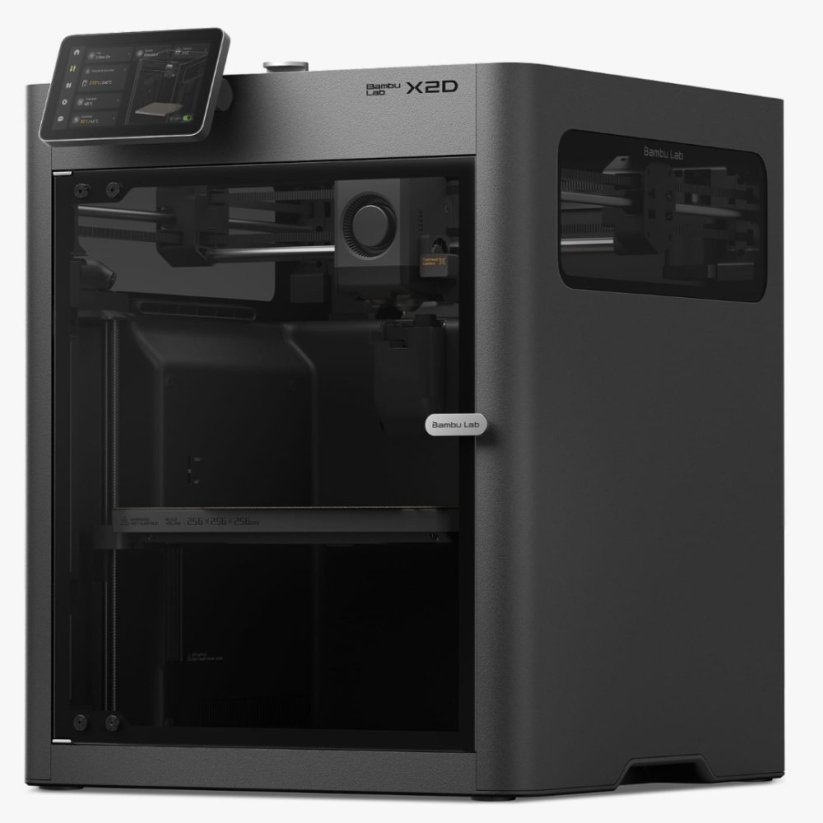
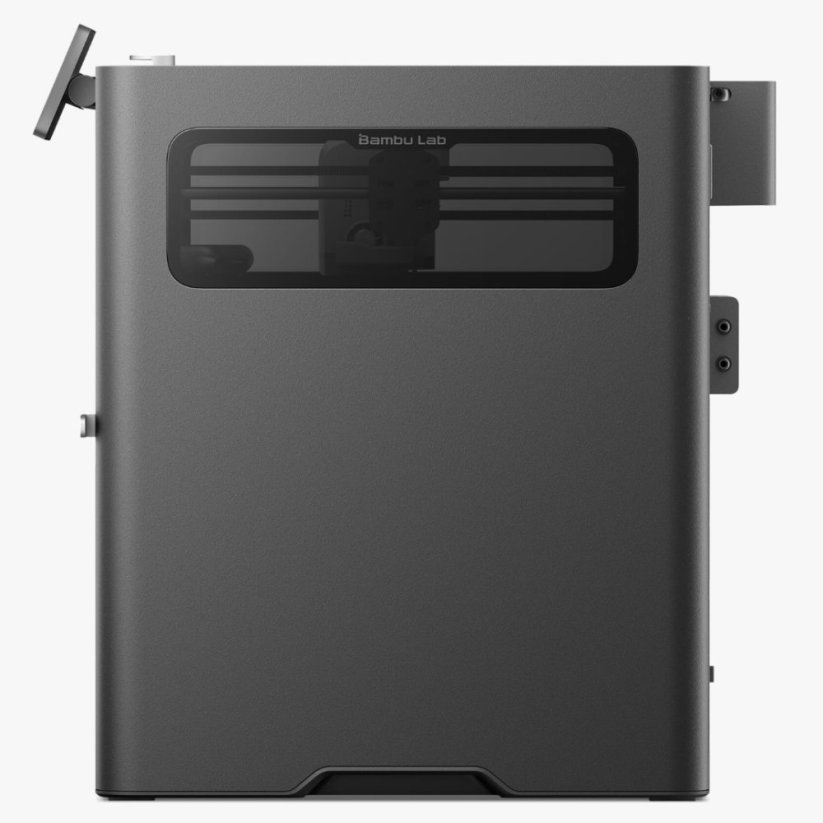


Bambu Lab X2D

Bambu Lab X2D is a dual-nozzle 3D printer with a 65 °C heated chamber and lower waste during multi-color printing than typical AMS-only setups. It makes the most sense for cleaner supports using a dedicated interface material, engineering materials and fast prototyping. More
Product code: BAMX2D Shipping and Payment
Bambu Lab X2D is a dual-nozzle 3D printer with a 65 °C heated chamber and lower waste during multi-color printing than typical AMS-only setups. It makes the most sense for cleaner supports using a dedicated interface material, engineering materials and fast prototyping. More
Product code: BAMX2D Shipping and Payment
Bambu Lab X2D
Bambu Lab X2D is the successor to the X1 Carbon for users who want more than a standard single-nozzle printer, but do not need a large and expensive H-series machine. The biggest change is the dual-nozzle system, which is most useful for support material, a second color and material combinations.
In practice, the key point of the X2D is not just speed. What matters more is that it handles multi-material and multi-color printing with lower waste than a typical single-nozzle printer switching filament through AMS. If you regularly deal with more complex models, supports or prototypes made from more demanding materials, that difference matters far more than a simple spec sheet.
What makes the X2D interesting
- Two nozzles on one toolhead mean less waste during color changes and a more practical workflow with support material
- 65 °C heated chamber helps with engineering filaments such as ABS, ASA and nylon
- 300 °C nozzle expands material options beyond regular hobby printers
- Up to 1000 mm/s speed and 20,000 mm/s² acceleration make it suitable for fast prototyping
- Automatic nozzle alignment and Dynamic Flow Calibration reduce the need for manual tuning before a print
- Three-stage filtration and chamber temperature control improve comfort and usability during longer print jobs
How the dual-nozzle system works in practice
The X2D does not use two fully equal nozzles. The main nozzle is direct drive and that is the one you want to use for the actual part. The auxiliary nozzle acts more like a secondary tool and is most useful for supports, a second color or a less critical material. This is an important detail, because it is exactly where the difference between marketing and real-world use becomes clear.
In other words: if you expect two identical print heads for any possible material combination, this is not that machine. But if you want cleaner supports, lower waste and a smarter multi-material workflow than a standard AMS-based setup, the X2D makes a lot of sense. In practice, that means printing the model with the main left nozzle and leaving the auxiliary nozzle for support or interface material, which leads to cleaner support separation and less risk of damaging the surface.
When the X2D makes sense
- For prototypes and functional parts where you want a fast machine with an enclosed heated chamber
- For support-heavy prints where cleaner support separation matters
- For multi-color printing if you dislike the waste and slower switching of a single-nozzle setup
- For engineering materials where the 65 °C chamber, 300 °C nozzle and better thermal management actually help
When another model may be a better fit
If you mainly want the simplest and cheaper Bambu printer for PLA and PETG, the P2S can still make more sense. If you want a larger machine and have more ambitious workflow requirements, then the H-series is the logical next step. The X2D sits between those two: clearly more capable than a standard single-nozzle printer, but still more compact and accessible than an H2D or H2C.
Good to know before buying
- the auxiliary nozzle is best treated as a tool for supports, a second color and secondary material, not as a fully equal main print head for every case
- the machine benefits from the Bambu ecosystem and makes the most sense for users who want to print rather than endlessly tune
- the optional Vision Encoder can push accuracy further if you are working on more demanding applications
- automatic nozzle alignment and Dynamic Flow Calibration run before printing, which removes part of the manual setup work
- the auxiliary Bowden path is not ideal for standard soft TPU, so flexible materials are best planned mainly for the main nozzle
Technical specifications
| Parameter | Value |
|---|---|
| Build volume | 256 × 256 × 260 mm |
| Shared build area for both nozzles | 235.5 × 256 × 256 mm |
| Maximum nozzle temperature | 300 °C |
| Heated bed temperature | 120 °C |
| Actively heated chamber | 65 °C |
| Filament diameter | 1.75 mm |
| Included nozzle | 0.4 mm |
| Maximum toolhead speed | 1000 mm/s |
| Acceleration | 20,000 mm/s² |
| Display | 5" color touchscreen LCD |
| Cameras | Built-in Full HD camera + toolhead camera |
| Filtration | Three-stage filtration + active chamber control |
| Connectivity | dual-band Wi‑Fi, USB |
| Power | 200-240 VAC, 50/60 Hz |
| Outer dimensions | 392 × 406 × 478 mm |
Frequently asked questions
Is the X2D suitable for engineering materials?
Yes. That is one of the main reasons to consider it, thanks to the 65 °C heated chamber and 300 °C nozzle.
Do two nozzles really reduce waste during color changes?
Yes, significantly, especially compared to a standard single-nozzle setup that has to swap and purge material more often.
Is it a better choice than the P2S?
Not automatically. If you mainly want a simple printer for common materials, maybe not. If you want cleaner supports, lower waste and a more useful multi-material workflow, then yes.
| Manufacturer | Bambu Lab |
|---|---|
| Filament diameter | 1,75 mm |
| Heated bed temperature | 120 °C |
| Hotend temperature | 300 °C |
| Print volume | 256 × 256 × 260 mm |
| External dimension | 392 × 406 × 478 mm |
| Nozzle diameter | 0,4 mm |
| Hotend type | All-metal |
| Extruder type | Direct |
| Compatible models | Bambu Lab X2D |
| Voltage | 200-240 VAC, 50/60 Hz |
| Camera | Built-in Full HD 1920x1080 |
| Device display | 5" (12.7cm) color touchscreen LCD |
| Interface | WiFi, Bambu-Bus, Micro-SD, USB |
| Filament sensor | Yes |